
← コラム一覧に戻る ← Back to Column Index
【前編】バランス接続でもGND接続が必要な理由 【Part 1】Why GND Connection Matters in Balanced Audio
なぜBrise AudioはGND接続にこだわるのか Why does Brise Audio insist on GND connection?
弊社のミニミニケーブル(ライン接続用ケーブル)をご覧いただくと、GND接続についての注意書きや、4.4mm+3.5mm(GND専用)to 4.4mmといった分岐ケーブルがラインナップされていることに気づかれるかもしれません。 If you look at our mini-to-mini cables (line connection cables), you may notice warnings about GND connection and products such as 4.4mm + 3.5mm (GND dedicated) to 4.4mm splitter cables in our lineup.

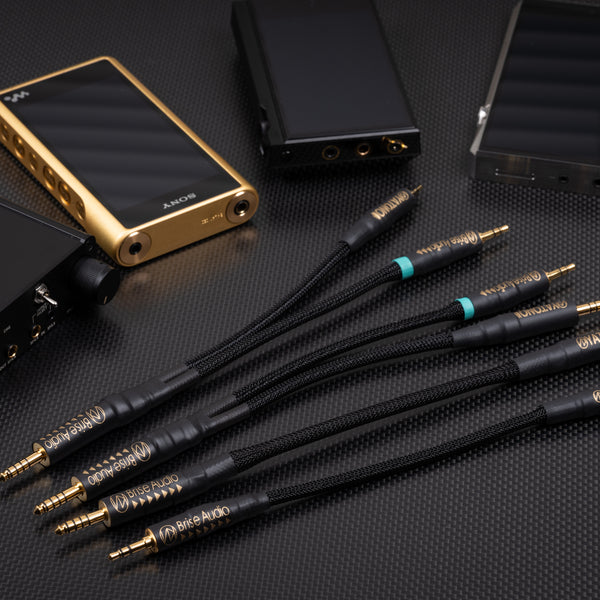


「バランス接続なのに、なぜわざわざGND用の線が要るの?」——これは実際によくいただく疑問です。 "Why do I need a GND wire when it's a balanced connection?" — This is a question we frequently receive.
実際、イヤホンやヘッドホンのリケーブルを見ると、多くの場合はL+/L−/R+/R−の4本だけで構成されており、GND線は含まれていません。それでもイヤホンは問題なく鳴ります。ところが、DAPのラインアウトからポータブルアンプへバランス接続する場合、GND線を接続しないとノイズや誤動作が起きることがあります。 In fact, looking at earphone and headphone re-cables, most are composed of just four wires — L+/L−/R+/R− — with no GND wire included. Yet earphones work perfectly fine. However, when connecting a DAP's line output to a portable amplifier via balanced connection, not connecting the GND wire can cause noise and malfunction.
同じ「バランス接続」なのに、なぜアンプのときだけGNDが必要なのか。弊社がGND接続を繰り返しお願いしている理由を、回路の仕組みからお伝えします。 Why is GND necessary only when connecting to an amplifier, even though both are "balanced connections"? We'll explain the reason we repeatedly emphasize GND connection, from the perspective of circuit design.
イヤホンとアンプ——信号の受け取り方が違う Earphones vs. Amplifiers — Different ways of receiving signals
バランス信号は、HOT(正相)とCOLD(逆相)の2本の線で、互いに逆向きの波形を伝送します。 A balanced signal transmits inverted waveforms through two wires: HOT (non-inverted) and COLD (inverted).
イヤホン・ヘッドホンの場合 For earphones and headphones
イヤホンの中にあるボイスコイルは、HOTとCOLDの「電位差」で振動板を動かします。シーソーと同じで、両端の差だけで動く仕組みです。シーソー全体が地上にあろうと高台にあろうと動き方は変わりません。つまり基準点(GND)がどこにあっても関係ないのです。 The voice coil inside an earphone moves the diaphragm using the "voltage difference" between HOT and COLD. Like a seesaw, it operates solely on the difference between the two ends. Whether the seesaw is on the ground or on a hilltop, its movement remains the same. In other words, the reference point (GND) is irrelevant.
だから、バランス端子にGNDピンがなくても問題ありません。 That's why balanced connectors work fine without a GND pin.
アンプの入力回路の場合 For amplifier input circuits
アンプの差動入力回路は、自分のGNDを基準にして、HOTが何V、COLDが何Vと個別に電圧を測定し、その差を取って信号を取り出します。 An amplifier's differential input circuit measures the voltage of HOT and COLD individually, using its own GND as the reference, and extracts the signal by taking the difference.
つまり、アンプは「GNDからの高さ」を見ています。この基準がプレーヤーとアンプの間でズレていると、正しく信号を受け取れません。 In other words, the amplifier looks at the "height from GND." If this reference is misaligned between the player and the amplifier, the signal cannot be received correctly.
GNDとは何か What is GND?
GNDは回路の「電圧ゼロ」の基準点です。すべての電圧はこの点からの相対値として測定されます。 GND is the "zero voltage" reference point of a circuit. All voltages are measured as relative values from this point.
ここで重要なのは、バッテリー駆動の機器はそれぞれ独立したGNDを持っているということです。 The key point here is that battery-powered devices each have their own independent GND.
たとえるなら、水面に浮かぶ二つの船をイメージしてみてください。それぞれの船は独立に揺れているので、船Aの甲板上で「高さ1m」と言っても、船Bの甲板から見た高さとは一致しません。DAPとポータブルアンプの関係も同じです。それぞれのバッテリーを基準にGNDを決めているため、2台の「電圧ゼロ」は必ずしも一致しないのです。 Imagine two boats floating on water. Each boat rocks independently, so "1 meter above the deck" on Boat A doesn't match the same measurement from Boat B's deck. The relationship between a DAP and a portable amplifier is the same. Since each device defines its GND based on its own battery, the "zero voltage" of the two devices doesn't necessarily match.
GND接続とは、この二つの船の舷側をしっかり固定して、甲板の高さを揃えることに相当します。基準が揃えば、船Aで測った「高さ1m」は船Bでも同じ「高さ1m」になります。 Connecting GND is like firmly securing the two boats together so their decks are at the same height. Once the reference is aligned, "1 meter" on Boat A means the same "1 meter" on Boat B.
これはバッテリー駆動の機器に限った話ではありません。据え置きのAC電源機器でも、内部にトランスを搭載して電源を絶縁しているため、回路側のGNDはコンセントのアース(大地)とは直接繋がっていません。コンセントのアース端子(3ピン目)で機器同士が接続されていればGNDは共有されますが、日本の一般家庭ではアース端子が未接続のケースも多く、その場合はバッテリー駆動と同様に、それぞれの機器が独立したGNDを持つことになります。 This is not limited to battery-powered devices. Even AC-powered desktop equipment has an internal transformer that isolates the power supply, so the circuit-side GND is not directly connected to the outlet's earth ground. If devices are connected via the earth terminal (3rd pin) of the outlet, GND is shared, but in many typical homes (especially in Japan), the earth terminal is often unconnected. In that case, each device has an independent GND, just like battery-powered devices.
つまり、ポータブル機器でも据え置き機器でも、GNDが共有されていなければ同じ問題が起きうるということです。 In other words, whether portable or desktop, the same problem can occur if GND is not shared.
GND未接続で何が起きるか What happens without GND connection?
GND未接続でDAPからアンプへ信号を送ると、アンプ側は自分のGNDを基準に入力電圧を測ります。しかし、DAPのGNDとの間にはズレ(電位差)があるため、本来の信号にGNDのズレ分が上乗せされてしまいます。 When a signal is sent from a DAP to an amplifier without GND connected, the amplifier measures the input voltage using its own GND as the reference. However, since there is an offset (potential difference) between the DAP's GND and the amplifier's GND, the offset is added on top of the original signal.
このズレはHOTにもCOLDにも同じように乗るため「同相ノイズ」になります。バランス接続のメリットである同相ノイズ除去(CMRR)によってある程度は取り除けますが、2つの問題があります。 This offset appears equally on both HOT and COLD, making it "common-mode noise." While balanced connection's advantage — Common Mode Rejection Ratio (CMRR) — can remove it to some extent, there are two problems.
① CMRRは万能ではない——除去率には限界がある ① CMRR is not perfect — rejection ratio has limits
CMRRは同相ノイズを「完全にゼロにする」ものではなく、一定の比率で減衰させるものです。たとえばCMRRが80dBのアンプであれば、同相ノイズを1万分の1に抑えられますが、ゼロにはなりません。つまり、元々の同相ノイズが大きければ、除去後に残る成分も大きくなります。GND接続によって同相ノイズ自体を小さくしておくことが、音質面でも重要です。 CMRR does not "completely eliminate" common-mode noise — it attenuates it by a certain ratio. For example, an amplifier with 80dB CMRR can reduce common-mode noise to 1/10,000, but not to zero. This means the larger the original common-mode noise, the larger the residual after rejection. Keeping common-mode noise small through proper GND connection is important for sound quality.
先ほどの船のたとえに戻ると、CMRRとは「波で両方の船が同じように揺れた分を差し引いて、甲板上の荷物の高さの差だけを正確に読み取る能力」です。CMRRが高いアンプほど、揺れの影響を精密に取り除けます。しかし、どれほど精密でも完全にゼロにはできません。だからこそ、GND接続で船同士を固定して揺れ自体を小さくしておくことが大切なのです。 Returning to the boat analogy, CMRR is "the ability to subtract the common rocking of both boats and read only the difference in cargo height on deck." An amplifier with higher CMRR can more precisely remove the effect of rocking. However, even the most precise subtraction cannot reduce it to absolute zero. That is why it is important to secure the boats together via GND connection, minimizing the rocking itself.
② GND未接続だと同相ノイズがアンプの許容範囲を超えてしまう ② Without GND, common-mode noise can exceed the amplifier's tolerance
すべてのバランスアンプには「同相入力範囲」という許容範囲があります。GNDが正しく接続されていれば同相ノイズはごく小さく、この範囲が問題になることはまずありません。 All balanced amplifiers have a "common-mode input range." With proper GND connection, common-mode noise stays small and this range is never an issue.
しかしGND未接続だと、人体が筐体に触れたり周囲の電磁ノイズを拾うだけで、GND間の電圧が大きく変動します。同相入力範囲を超えれば過大入力となり、ノイズや誤動作の原因になります。 Without GND, however, simply touching the chassis or picking up ambient electromagnetic noise causes large voltage swings between GNDs. Exceeding the common-mode input range leads to overload, noise, and malfunction.
同相入力範囲を広げるにはアンプICの変更や電源電圧の拡大が必要ですが、GND接続が適切であればその必要はありません。また、バランスアンプでは同相入力インピーダンスを高く設計するのが一般的です。これはHOT/COLDの出力インピーダンスのミスマッチがあってもCMRRが低下しにくくするためですが、GND未接続時にはノイズ感度を高める方向にも働きます。 Widening the range requires changing amplifier ICs or increasing supply voltage, but this is unnecessary with proper GND connection. Additionally, balanced amplifiers typically use high common-mode input impedance to maintain CMRR even with source impedance mismatch — but without GND, this also increases noise sensitivity.
いずれも、GND接続が正しければ問題にならない設計です。 None of these are problems when GND is properly connected.
前編まとめ Part 1 Summary
イヤホン・ヘッドホンはHOTとCOLDの電位差だけで駆動するため、GND線がなくても動作します。一方、アンプの入力回路はGNDを基準に信号電圧を測定するため、プレーヤーとアンプでGNDを共有することが不可欠です。 Earphones and headphones operate solely on the voltage difference between HOT and COLD, so they work without a GND wire. On the other hand, an amplifier's input circuit measures signal voltage relative to GND, making it essential to share GND between the player and the amplifier.
GND未接続では、GND間の電位差が同相ノイズとしてアンプに入力され、CMRRでも除去しきれない問題を引き起こします。 Without GND connected, the potential difference between GNDs enters the amplifier as common-mode noise, causing problems that even CMRR cannot fully resolve.
後編では、実際にGND未接続でどの程度の同相ノイズが発生するのかを実験で確認し、弊社がこの問題にどう対策しているかをご紹介します。 In Part 2, we verify through experiments how much common-mode noise occurs without GND connection, and introduce how we address this issue in our products.